

 By
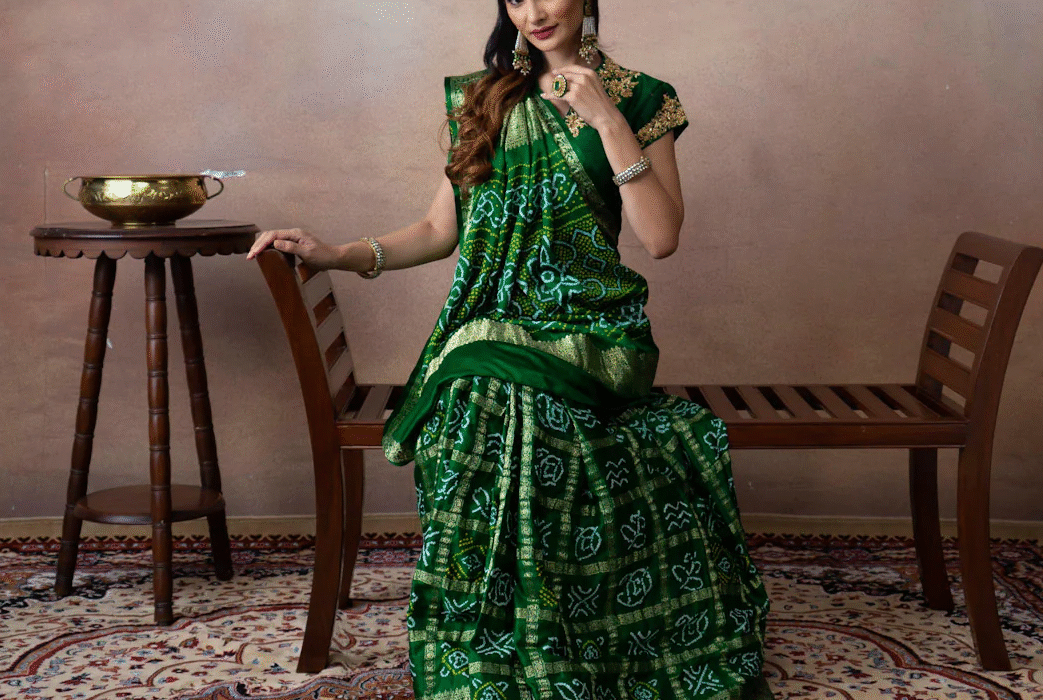
By Gharchola sarees are more than just a traditional garment—they are a living legacy of Gujarat’s rich textile heritage. Deeply associated with weddings, religious ceremonies, and auspicious occasions, a Gharchola saree reflects centuries of artistry, patience, and cultural symbolism. Every motif, color, and weave tells a story crafted by skilled artisans who preserve this timeless tradition.
Origins Rooted in Tradition
The Gharchola saree traces its roots to Gujarat, particularly among the Hindu and Jain communities. Traditionally worn by brides, these sarees are considered symbols of prosperity, purity, and new beginnings. The name “Gharchola” itself signifies a sacred cloth meant to be worn within the household during important rituals.
The Base Fabric: Strength Meets Elegance
The weaving process begins with selecting the base fabric—usually fine silk or cotton-silk blends. Silk is preferred for bridal Gharchola sarees because of its natural sheen and durability. The fabric must be strong enough to withstand intricate dyeing and weaving while maintaining a smooth, elegant drape.
The Signature Grid Pattern
One of the most distinctive features of a Gharchola saree is its grid or checkered pattern. This is achieved by tightly tying the fabric at regular intervals using cotton threads before dyeing—a traditional tie-and-dye technique. These tied sections resist dye penetration, resulting in perfectly aligned squares once the threads are removed.
This step demands precision and experience. Even a minor misalignment can disrupt the symmetry of the design, making the artisan’s skill crucial to the final outcome.
Dyeing: Bringing the Saree to Life
After tying, the saree is dyed, most commonly in vibrant shades of red, maroon, green, or yellow—colors that hold cultural and spiritual significance. Red, in particular, symbolizes fertility and marital bliss. Natural and chemical dyes may be used, but traditional artisans often prefer methods that ensure long-lasting color and minimal fabric damage.
Once dyed and dried, the threads are carefully untied to reveal the iconic Gharchola pattern.
Zari Weaving and Hand Embellishment
The final and most labor-intensive stage involves zari work. Using gold or silver threads, artisans hand-weave motifs like peacocks, flowers, and religious symbols within each square. This zari weaving elevates the saree from a textile to a work of art.
Depending on the complexity, a single Gharchola saree can take weeks or even months to complete.
A Heritage Worth Preserving
In an age of mass production, authentic sarees stand as a testament to slow fashion and sustainable craftsmanship. Each saree carries the touch of human hands, generations of knowledge, and the pride of artisans who continue to keep this tradition alive.
Owning a Gharchola saree is not just about style—it is about honoring heritage, craftsmanship, and culture woven into every thread.