

 By
By As industries increasingly operate in demanding environments, the need for piping components that can withstand corrosion, pressure, temperature variations, and mechanical stress continues to grow. Among the materials gaining attention are Duplex and Super Duplex stainless steels, particularly for manufacturing high-performance buttweld fittings.
Duplex and Super Duplex Buttweld Fittings combine strength, corrosion resistance, and durability, making them suitable for applications where conventional stainless steel fittings may not provide the required performance. From oil and gas facilities to chemical processing plants and marine projects, these fittings are becoming an important part of modern piping systems.
What Are Duplex and Super Duplex Buttweld Fittings?
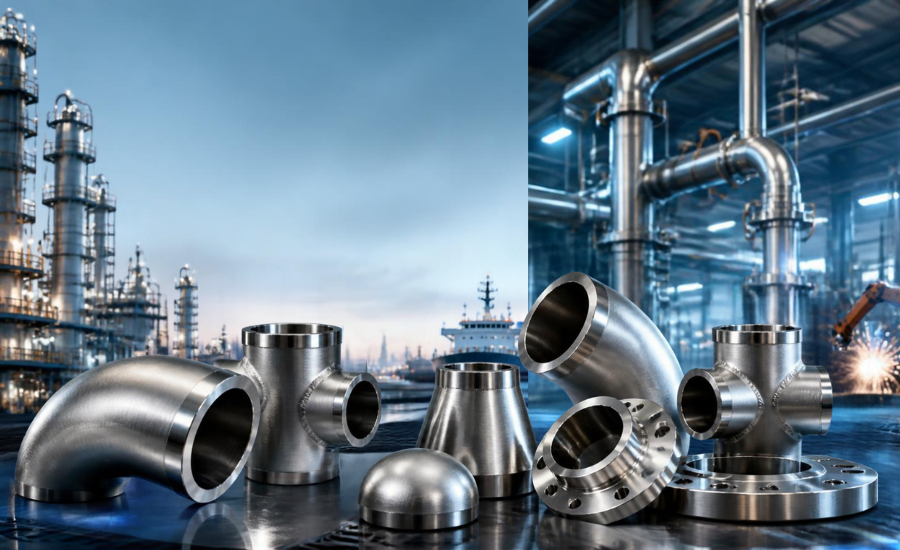
Buttweld fittings are piping components designed to be welded directly to pipes, creating a strong and continuous connection. Common types include elbows, tees, reducers, caps and crosses.
Duplex stainless steel has a mixed austenitic-ferritic microstructure. This combination provides a useful balance of mechanical strength and corrosion resistance.
Super Duplex stainless steel takes these properties further, offering higher resistance to chloride-related corrosion and greater mechanical strength in many demanding environments.
The choice between Duplex and Super Duplex generally depends on factors such as operating conditions, chemical exposure, pressure, temperature and project specifications.
Why Is Demand Increasing?
Several industrial trends are contributing to the growing use of Duplex and Super Duplex fittings.
1. Excellent Corrosion Resistance
Corrosion can significantly affect the reliability and service life of piping systems. Duplex and Super Duplex stainless steels offer strong resistance to several forms of corrosion, including pitting and stress corrosion cracking under appropriate conditions.
This makes them particularly useful in environments involving seawater, chlorides, chemicals and other aggressive media.
2. High Mechanical Strength
Duplex grades are known for their relatively high yield strength compared with many conventional austenitic stainless steels. This strength can be advantageous in high-pressure piping applications.
For engineers, higher material strength may also provide opportunities to optimise piping component design, depending on applicable codes, specifications and operating requirements.
3. Suitable for Demanding Industrial Environments
Modern industrial facilities often operate under challenging conditions. Offshore platforms, chemical plants, desalination facilities and power generation projects can expose piping systems to corrosive fluids, pressure fluctuations and demanding operating conditions.
Duplex and Super Duplex Buttweld Fittings are designed for such applications when their material characteristics match the project requirements.
Key Industries Using These Fittings
Oil and Gas
The oil and gas sector remains an important application area for Duplex and Super Duplex piping components. They can be used in process piping, offshore systems and other applications where corrosion resistance and mechanical strength are important considerations.
Chemical Processing
Chemical processing plants handle a wide range of aggressive substances. Selecting appropriate piping materials is therefore essential. Duplex and Super Duplex fittings can be specified for applications where resistance to particular chemicals and operating conditions is required.
Marine and Offshore
Exposure to seawater and chloride-rich environments can create significant corrosion challenges. Super Duplex stainless steel is therefore commonly considered for selected marine and offshore piping applications.
Water and Desalination
Desalination and water-treatment facilities can involve high chloride exposure and demanding process conditions. Duplex and Super Duplex components can provide a practical material option for suitable sections of these systems.
Power Generation
Power plants rely on extensive piping networks for water, steam, cooling and process applications. Depending on the system design and service conditions, Duplex stainless steel fittings may be selected where strength and corrosion resistance are important.
Choosing the Right Buttweld Fittings
Selecting Duplex or Super Duplex fittings should not be based on material grade alone. Engineers and procurement teams should consider the complete operating environment.
Important factors include:
- Material grade and applicable standards
- Pipe dimensions and wall thickness
- Operating pressure and temperature
- Fluid or chemical composition
- Chloride concentration and corrosion conditions
- Welding and fabrication requirements
- Applicable design codes and project specifications
- Testing, inspection and certification requirements
Working with an experienced manufacturer or supplier can help ensure that the fittings are appropriate for the intended piping system.
The Importance of Manufacturing Quality
Material selection is only one part of fitting performance. Manufacturing quality, dimensional accuracy, heat treatment, welding practices and inspection procedures can all influence the reliability of a finished component.
For critical industrial applications, buyers may also require material test certificates, traceability, non-destructive testing and other quality documentation according to project requirements.
Looking Ahead
The demand for Duplex and Super Duplex Buttweld Fittings is closely linked to the development of industries operating in increasingly challenging environments. As companies focus on equipment reliability, corrosion management, maintenance requirements and long-term operating performance, high-performance stainless steel piping components are likely to remain an important consideration.
For every project, however, the appropriate material should be selected based on actual service conditions, engineering requirements and relevant standards rather than simply choosing the highest-grade material.
Conclusion
Duplex and Super Duplex Buttweld Fittings offer a combination of corrosion resistance, mechanical strength and durability that makes them suitable for a wide range of demanding industrial applications. Their use across oil and gas, chemical processing, marine, desalination and power sectors reflects the growing need for dependable piping solutions.
As industrial projects become more technically demanding, selecting the right fitting material, manufacturing quality and specifications will remain essential for building reliable and efficient piping systems.